Nicholas Tzikas, MD, MPHHeadache & Facial Pain Medicine

Complex & persistent headache

Why some headaches last for years.

A headache that has resisted medication is often a headache whose cause has not yet been found. Pressure and flow problems are the most commonly missed — because finding them requires measurement, and treating them requires an interventional program.

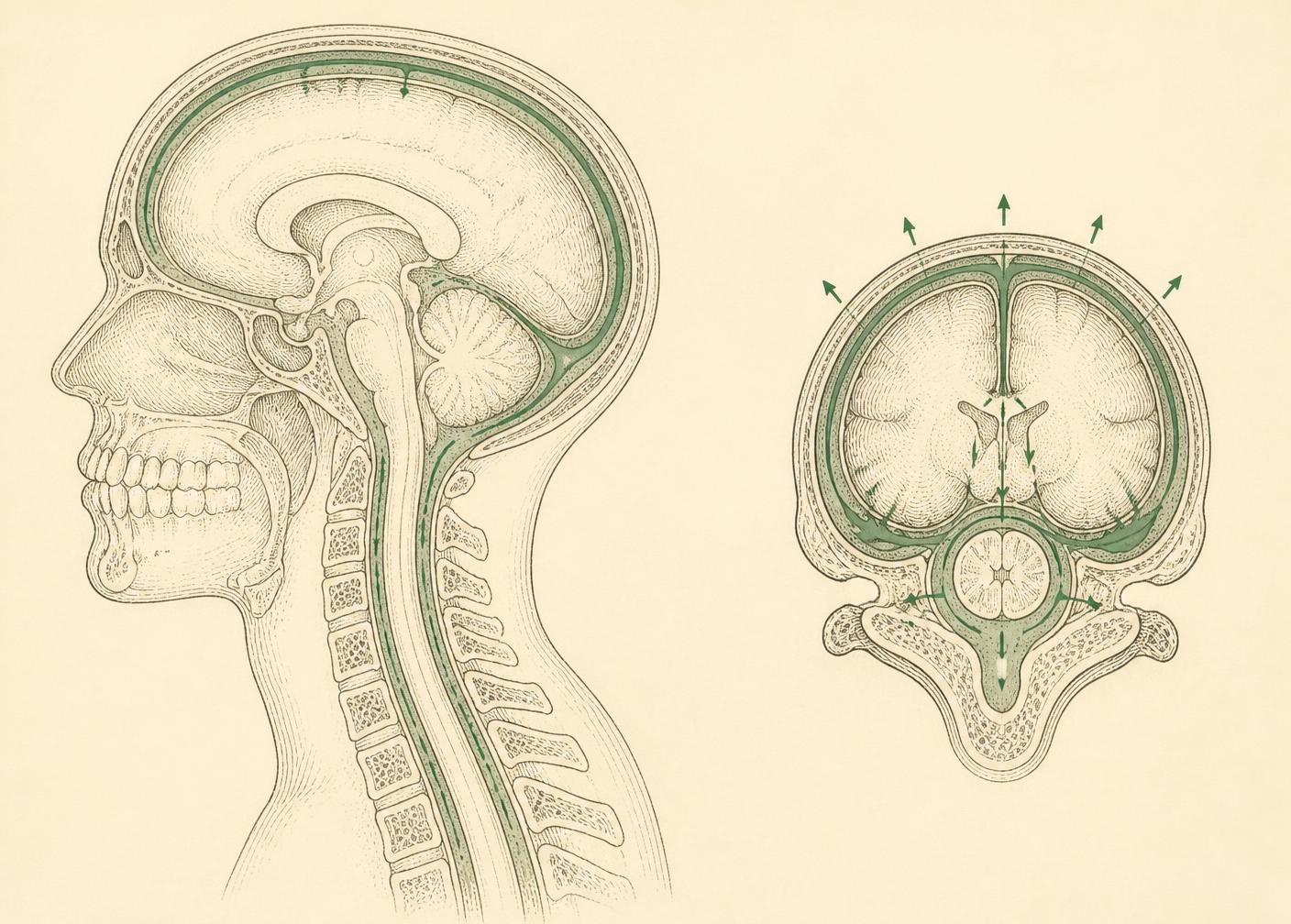
Illustration of cerebrospinal fluid spaces around the brain and spinal cord
Pressure and flow are physical problems — they are found by measuring, not by guessing.

The gap

Many headache clinics focus on medication. We also measure pressure and flow.

A general neurologist or headache clinic can offer an excellent medication plan. What most cannot offer is the next step: measuring the pressure inside your head, imaging the veins that drain it, and catheterizing the vessels that supply it.

Our center is part of Interventional Neuro Associates. That means the diagnostic plan and any interventional treatment are directed by the same practice, coordinated in one place.

Findings that change the plan

Three places we look that others may not.

Pressure

Spinal fluid pressure — too high, or too low

Idiopathic intracranial hypertension sits at one end; spontaneous spinal fluid leak and post-dural-puncture headache at the other. Both are pressure failures, both are frequently attributed to migraine for years, and both are treatable once identified.

Workup & treatment available
  • Dedicated ophthalmologic exam for papilledema and visual fields
  • MRI/MRV with a protocol read for pressure signs, not just for tumors
  • Opening pressure measurement by lumbar puncture, with therapeutic drainage
  • CT myelography or dynamic imaging when a leak is suspected
  • Epidural blood patch and targeted leak repair pathways
Venous outflow

How blood leaves the head

Narrowing of the transverse or sigmoid sinuses, jugular compression, and other outflow restrictions raise intracranial pressure and produce headache, pulsatile tinnitus, and visual symptoms. This is invisible on a routine MRI read.

Workup & treatment available
  • MR or CT venography of the dural sinuses and jugular veins
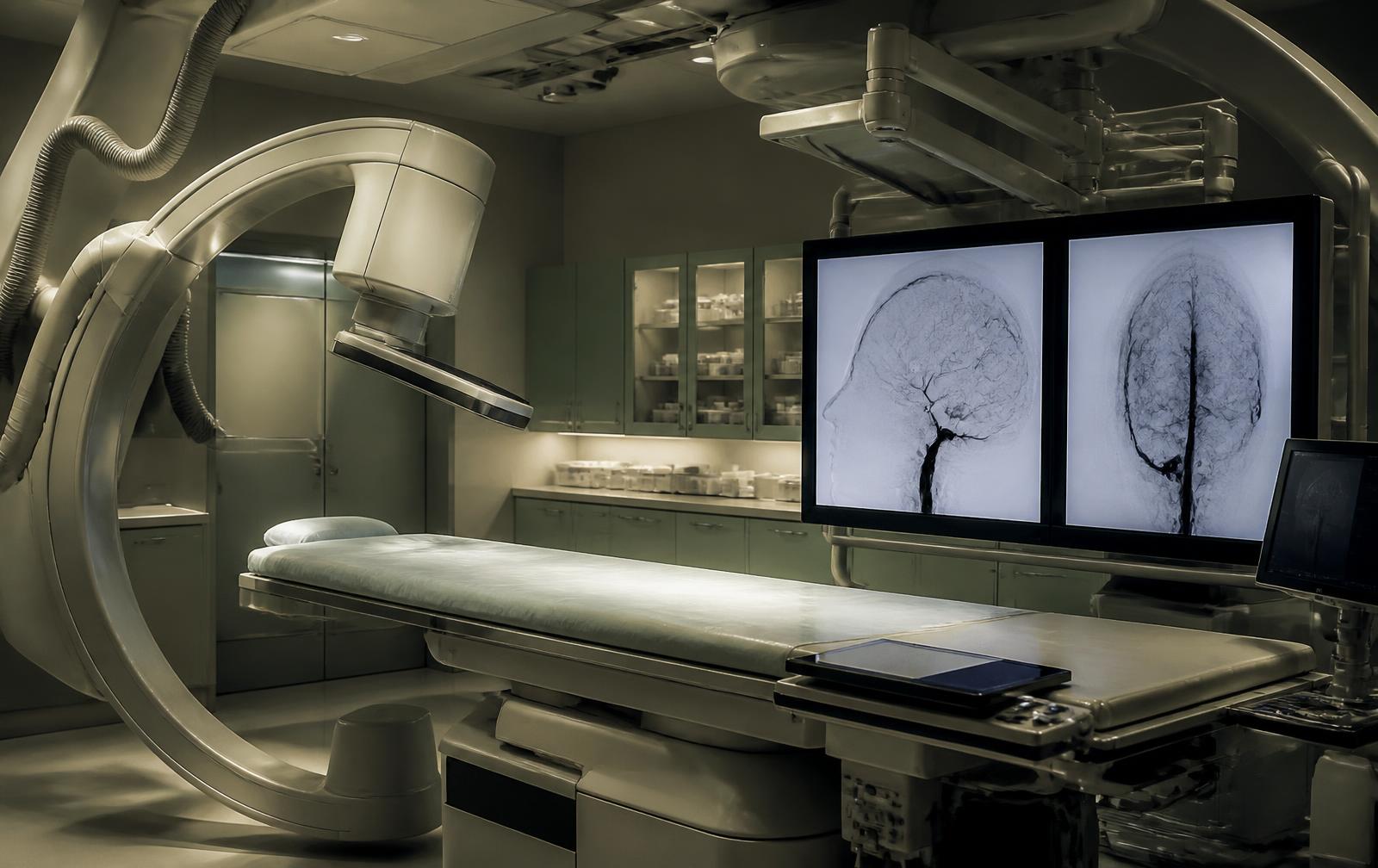
  • Catheter cerebral venography with pressure gradient measurement
  • Assessment for venous sinus thrombosis, past and present
  • Coordination for venous stenting or decompression when gradients warrant it

Arterial & flow

Vessels, fistulas, and blood flow

A minority of long-standing headaches are secondary to a vascular problem — arterial dissection, dural arteriovenous fistula, vasculitis, reversible vasoconstriction, or a flow-limiting stenosis. These are diagnoses of imaging and angiography, not of trial-and-error prescribing.

Workup & treatment available
  • CTA/MRA of the head and neck with vessel wall assessment where relevant
  • Diagnostic cerebral angiography when non-invasive imaging is inconclusive
  • Evaluation for dural arteriovenous fistula in pulsatile or positional headache
  • Endovascular treatment coordinated within the same practice
Neuro-angiography suite with cerebral venous imaging on the monitors
Diagnostic venography and pressure measurement are performed in a hospital neuro-angiography suite, directed by the same practice.

Worth a second look

Signs your headache may be a pressure or flow problem.

None of these is proof. Any of them is a reason to be evaluated properly.

  • Headache that is clearly worse lying down — or clearly worse standing up
  • Whooshing or pulsing in one ear, or ringing that matches your heartbeat
  • Transient greying or blacking out of vision, especially when you bend or strain
  • Headache that began abruptly on a specific day and never fully left
  • Headache after an epidural, spinal tap, chiropractic manipulation, or minor trauma
  • Neck and shoulder pain with visual change, fullness behind the eyes, or brain fog
  • A 'normal MRI' but a headache that has not responded to three or more preventives
  • Papilledema, a widened blind spot, or an eye exam finding no one followed up on

Second opinions

If the diagnosis still feels incomplete.

Bring your imaging, your records, and your list of what has been tried. We will start by reviewing the diagnosis together.

Request a consultation →