About
Headache is a symptom. Migraine is a complex neurological condition.
There are more than 200 distinct headache and facial pain disorders. Telling them apart is the work.
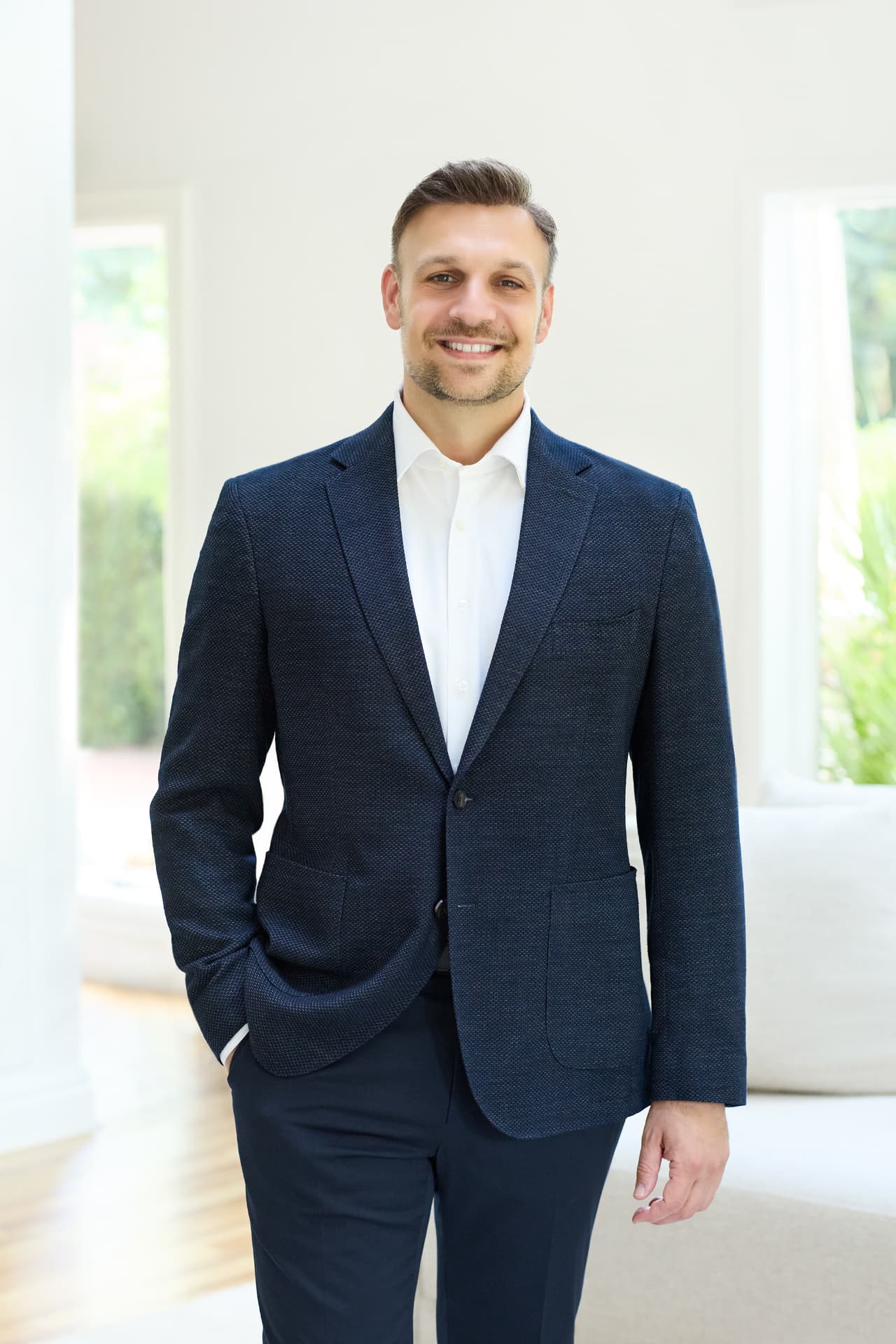
Director, Center for Interventional Headache Medicine
I am a headache and facial pain specialist. That is the entirety of my practice.
Whatever is producing a headache has no interest in the boundaries we draw between specialties.
The cause may be pressure in the spinal fluid, too much of it or too little. It may be blood that cannot drain the way it should. A vessel wall. A hormone that falls on a schedule. A jaw, a sinus, a night of broken sleep, a joint that has been loose since childhood and finally let something go.
A field that lives at an intersection cannot recruit from one road. Fellowship training in headache medicine is open to physicians from neurology, internal medicine, pediatrics, and primary care, because headache does not present to a neurologist first. A headache that feels like sinus goes to an ENT. One behind the eye goes to an ophthalmologist. Most of them go to a primary care physician, who has to sort out which is which.
I came to it from primary care, and I have never stopped using that training. Migraine does not arrive alone. It arrives with blood pressure, mood, sleep, weight, hormones, and a medication list someone has to reconcile, and every preventive I might reach for collides with one of them. The drug that finally quiets the headaches can raise the blood pressure, flatten the mood, add weight, or fail quietly against something the patient has been taking for years. Choosing well means treating the whole person, and I was taught to do that before I was taught headache.
It changed how I think about the time between visits, too. Most of what decides whether a plan works happens at home, on days I am not there, in the moment a patient decides whether this one counts and whether to treat it yet. Years of continuity care taught me to ask about that hour. Plans fail there more often than they fail because the prescription was wrong.
After serving as chief resident, I completed fellowship training in headache and facial pain medicine under Dr. Stewart Tepper at Dartmouth-Hitchcock. I later joined the faculty at Yale School of Medicine, where I co-directed the Headache and Facial Pain Fellowship and led headache medicine at the Stamford and Greenwich sites. Since then my practice has been limited to headache and facial pain: migraine, cluster headache, trigeminal neuralgia, occipital neuralgia, post-traumatic headache, and the conditions that get mistaken for all of them. I also help train the specialists coming up behind me.
Having seen several clinicians already is not a failure of prior care. It is usually the reason a subspecialty evaluation is warranted. My job is to add that layer of depth and to work alongside the physicians you have been seeing, not around them.
The physician who owns the headache rarely owns the cause.
Clinical perspective
Why headache medicine is more complex than it looks.
There are more than 200 distinct headache and facial pain disorders. Many of them look alike at first glance. Throbbing, pressure, one-sided, behind the eye. Each has its own biology, triggers, and treatment logic. Telling them apart is the work.
Migraine is a hereditary neurological condition that travels in families. The same genetic wiring that can make the nervous system vigilant and adaptable can also make it hypersensitive: ordinary light, sound, hormones, sleep changes, or weather shifts become triggers that last for hours or days. It is not a personality flaw or a stress reaction; it is biology, passed across generations, that has become disabling rather than protective.
Recognizing when pain is a symptom of something else, and when it is the primary disorder itself, is what the subspecialty is built for.
The diagnosis usually lives in the details of the history.
From that history — the pattern, the family story, the prior workup, and the triggers that are easy to miss — a clearer picture usually emerges. The goal is not just to treat the pain, but to understand the system producing it.
Training & appointments
Academic Leadership
Director, Center for Interventional Headache Medicine
Present
Interventional Neuro Associates, Manhattan & Long Island, New York
Assistant Professor of Clinical Neurology
2018–2026
Yale School of Medicine, Department of Neurology
Co-Director, Headache & Facial Pain Fellowship
Yale School of Medicine
Site Director, Headache Medicine
Yale Stamford & Greenwich
Training
Headache & Facial Pain Medicine Fellowship
Dartmouth-Hitchcock Medical Center, mentored by Dr. Stewart Tepper
Chief Resident
Hofstra Northwell School of Medicine
Residency
Hofstra Northwell School of Medicine
Internship
Dartmouth-Hitchcock Medical Center
Education
MD, MPH
St. George's University · Public Health Practicum, Columbia University
Academic & peer inquiries
Fellowship, teaching, research, and media.
For peer consultation, fellowship or teaching matters, research collaboration, or media requests, please write directly rather than through the clinical office.
Contact →